
Sewell Sillman: In Process
Sewell Sillman (1924 – 1992) was an American abstract artist, educator, and print publisher.
Sewell “Si” Sillman was born in 1924 in Savannah, Georgia and attended high school in Atlanta. In 1942, Sillman enlisted in the U.S. Army Air Force Reserve while pursuing studies in civil engineering at Georgia Tech and later at Johns Hopkins. He saw active duty at the European front in 1944 and 1945 and was wounded at the Battle of the Bulge. After the war, Sillman re-enrolled at Georgia Tech, this time with a focus on architecture. Disaffected with the atmosphere, Sillman soon followed friends William Ragland Watkins and Albert Lanier to Black Mountain College in Asheville, North Carolina. Sillman recalled that Black Mountain College “…gave me a chance to get rid of absolutely every standard that I had grown up with… It was like a snake that loses its skin…What was left was someone who had absolutely no idea in the world what to do…It was marvelous.” Faculty at Black Mountain included Anni and Josef Albers, Buckminster Fuller, Merce Cunningham, Willem de Kooning, Walter Gropius and Robert Creeley. Among Sillman’s fellow students were Ray Johnson, Kenneth Noland, Robert Rauschenberg, and Susan Weil.
Sillman continued his architectural studies with Buckminster Fuller, but it was his introduction to Josef Albers that would change the course of his career. Of Albers, Sillman said, “What you get from Albers is not something that you can codify, that you can exhibit, that you can mine and make a buck with…It’s basic soul study in a sense. It goes inside of you.” Albers left Black Mountain in 1949 and accepted the position of head of the Department of Design at Yale, where Sillman soon followed, earning his BA in 1951 and his MFA in 1953 with a thesis on color. He joined the Yale Department of Art faculty in 1954 teaching color, drawing and painting, and later becoming director of undergraduate programs in art. Sillman had many notable students including Bruce Helander, Newton Harrison, and Howardena Pindell, who recently stated that Sillman’s courses on color “changed her life.” Sillman went on to teach at Parsons School of Design, Carnegie Tech, Ohio State University, SUNY Purchase, Penn State University and Rhode Island School of Design.
Ives-Sillman, Inc. was founded in 1962 by Sillman and his co-worker and fellow professor at Yale University, Norman Seaton Ives. They first published, Josef Albers: Interaction of Color (1963). Other artists published include Walker Evans, Piet Mondrian, Ad Reinhardt, Jean Dubuffet, Jacob Lawrence, Romare Bearden, and Roy Lichtenstein.
Sillman’s lifelong dedication to drawing as his primary mode of expression elevated draftsmanship far above mere graphic design. His paintings, though indebted to the geometric abstractions of Albers, are less academic and and more esoteric, with some compositions appearing like otherworldly portals with hints of the sublime. He was included in the exhibition Recent Drawings, U.S.A. at The Museum of Modern Art in 1956. He was shown at the Stable Galleries and the Sidney Janis Gallery in New York and later in life at Galerie Denise René in Paris. He is represented in the collections of The Museum of Modern Art, The Whitney Museum of American Art, the Florence Griswold Museum, and The Phillips Collection, among others. Sewell Sillman died in April, 1992 in Lyme, Connecticut, where he resided with his longtime parter, James McNair.
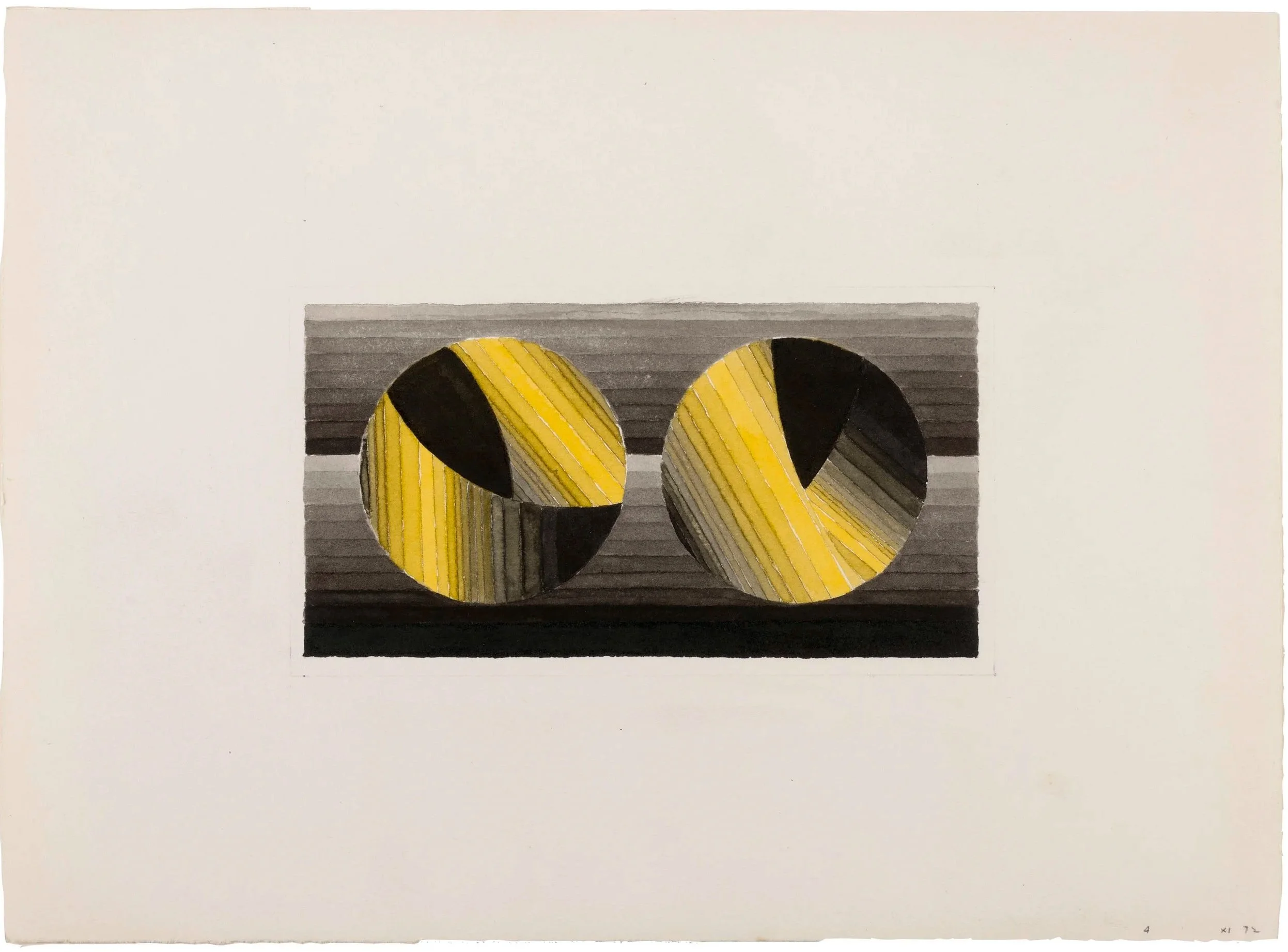
Sewell Sillman, Irreversible, 1972, watercolor and graphite on paper, 11 x 15 inches
![Sewell Sillman, Untitled [Sketch], c. 1970-1973, ink, graphite, charcoal, and pastel on paper, 9 x 6 5/8 inches](https://images.squarespace-cdn.com/content/v1/63b70e331deebc318f75001b/ff59b990-3a97-42a6-a919-6dee5f616f25/sillmansketch2.jpg)
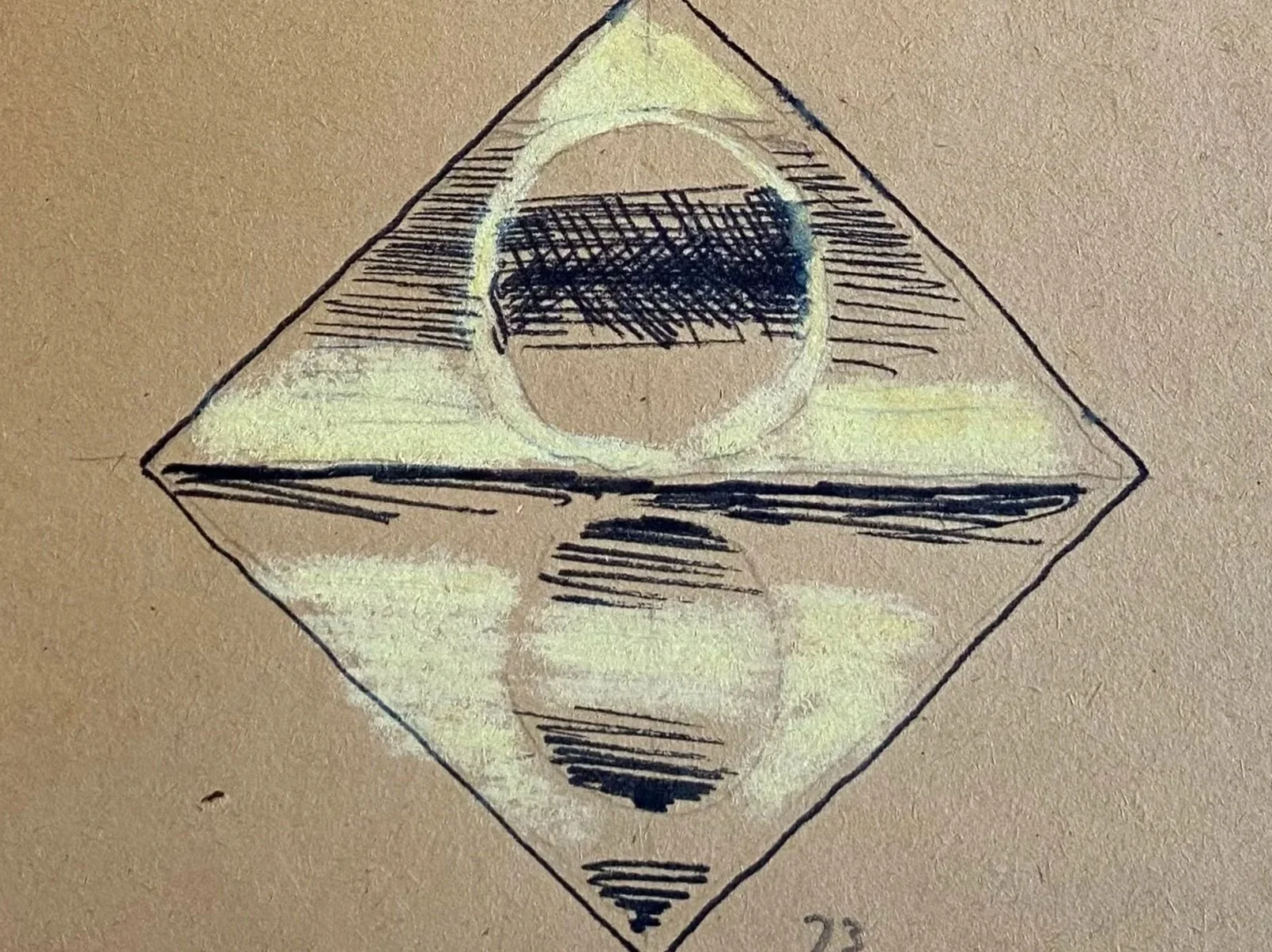
Sewell Sillman, Untitled [Sketch], c. 1970-1973, ink, graphite, charcoal, and pastel on paper, 9 x 6 5/8 inches
![Sewell Sillman, Untitled [Sketch], c. 1970, graphite on paper, 11 5/8 x 7 7/8 inches](https://images.squarespace-cdn.com/content/v1/63b70e331deebc318f75001b/a67fba89-b8ee-456e-b9a6-38c06bd46cc2/sillmansketch1.jpg)
Sewell Sillman, Untitled [Sketch], c. 1970, graphite on paper, 11 5/8 x 7 7/8 inches

Sewell Sillman, Untitled, c. 1977, ink and graphite on paper, 5 x 5 inches
![Sewell Sillman, Untitled [Sketch], 1977, graphite on paper, 5 x 8 inches](https://images.squarespace-cdn.com/content/v1/63b70e331deebc318f75001b/304735c8-74f5-4fea-a132-92a47865cd65/sillmansketch3.jpg)
Sewell Sillman, Untitled [Sketch], 1977, graphite on paper, 5 x 8 inches
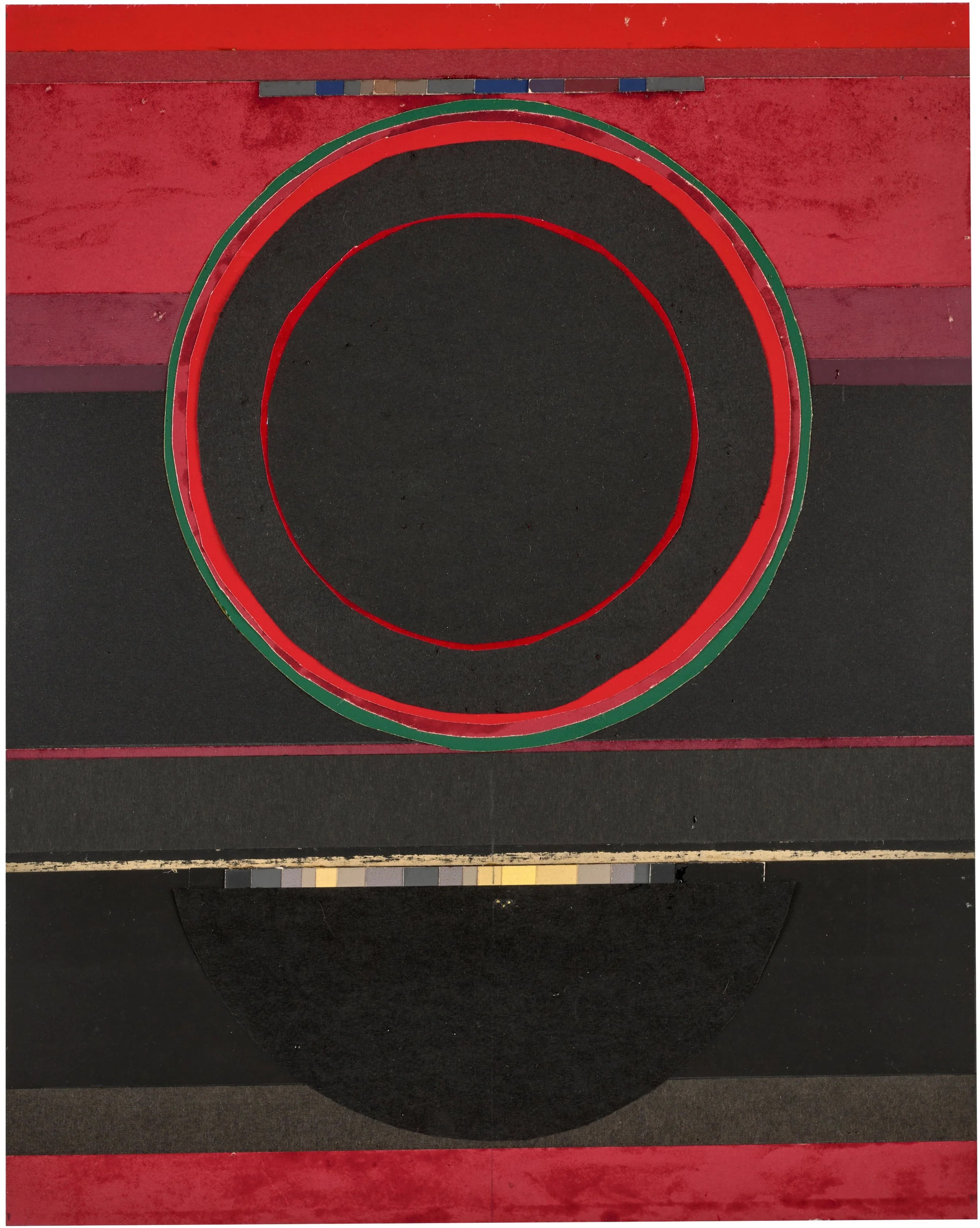
Sewell Sillman, The Sixth Orb (Zurich), 1973, mixed media paper collage, 10 1/2 x 8 1/2 inches
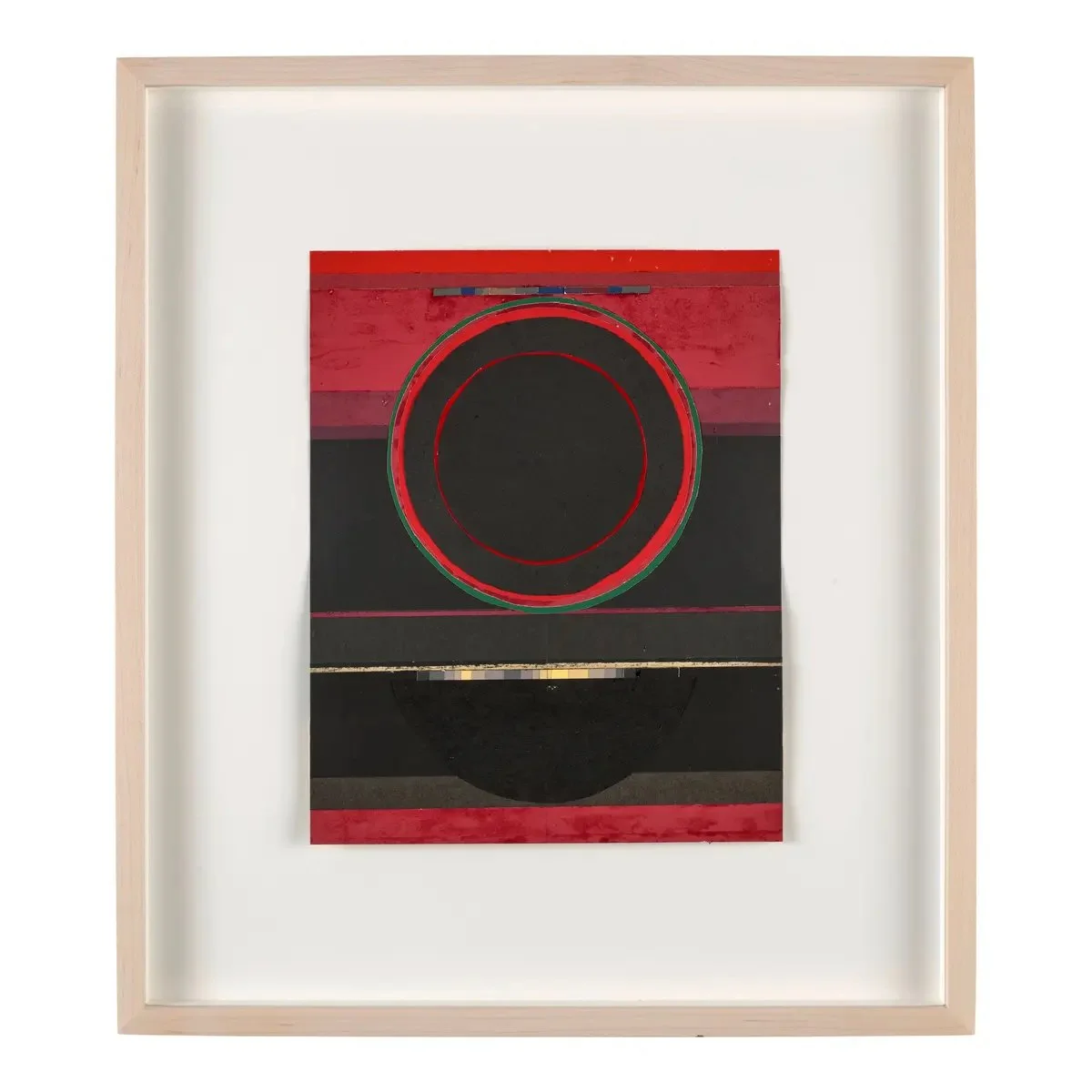
Sewell Sillman, The Sixth Orb (Zurich), 1973, mixed media paper collage, 10 1/2 x 8 1/2 inches

Sewell Sillman, Announcement for Exhibition Sewell Sillman: Paintings and Drawings, Feb. 1967, Lyman Allyn Museum, New London, CT, offset lithograph on paper; tripartite foldable card, as issued; text verso, 8 3/4 x 5 3/4 (folded)

Sewell Sillman: Peintures a l'aquarelle / esquisses au crayon, poster for solo exhibition at Galerie Denise René, Paris, April, 1987, offset printed, 16 x 16 inches

Announcement for exhibition Sewell Sillman/Paintings, Madison Gallery, Madison, CT, April 23-June 19, 1988, 5 1/2 x 8 inches (folded)

Sewell Sillman: Pushing Limits, catalogue for exhibition at the Florence Griswold Museum, Old Lyme Connecticut, 2010, 9 1/2 x 9 1/2 inches